Your Ad Here

Monday, August 18, 2008

The Buddha describes the four kinds of monks

The Sutta-Nipata

5. CUNDA SUTTA

Cunda the Smith

The Buddha describes the four kinds of monks
1 Cunda: I ask the sage Buddha of great wisdom, Lord of Dhamma, who is free from craving, the noblest of guides; how many kinds of monks are there in the world? Please tell me.

2 The Buddha: Cunda, there are four kinds of monks, not a fifth. I shall elucidate them to you, since you ask me: (i) one kind has won the Path, (ii) one expounds the Path, (iii) one lives on the Path, and (iv) one defiles the Path.
3 Cunda: Whom does the Buddha describe as one who has won the Path?

4 The Buddha: One who overcomes uncertainty, is freed from sorrow, delights in Nibbana, is detached, a guide of men and gods - such a person is said by the Buddha to be one who has won the Path.

5 Here, one knows Nibbana as the noblest (state) and expounds and explains the Dhamma; that sage who destroys uncertainly, is desireless - this second monk is called the one who expounds the Path.

6 One who has controlled himself mindfully, lives well on the Path according to the words of Dhamma well expounded; one who practices correct principles - this third of monk is called the one who lives on the Path.
7 One who disguises himself by wearing the robes of the well-conducted ones, travels for gain, disgraces families, is impudent, deceitful, unrestrained, a gossip and waffler pretending to be a real monk - he is one who defiles the Path.
8 Having comprehended these (four) he who is well-versed, house-holder, who is a noble, wise disciple and who has understood that ‘all of them are not alike’; seeing thus, he does not diminish his confidence. How could the defiled one and the undefiled one, the pure and the impure one, be considered as equals?

A happy married life the Buddhist way

A happy married life the Buddhist way

Venerable K Sri Dhammananda

There are no short-cuts to happiness in marriage. No two human beings can possibly live together in an intimate emotional relationship for a long period of time without having some misunderstanding or friction from time to time. Understanding and tolerance are required to overcome any feelings of jealousy, anger, and suspicion. To think that one does not need to adopt a give-and-take attitude is to presume that love in marriage is just there for the asking without any sacrifice.

Building a successful marriage

Success in marriage is based on compatibility rather than just finding the right partner. Both partners must try to be the right person by acting out of mutual respect, love and concern for each other. Love is an inner feeling and a fulfillment arising from mutual healthy growth with and for the other person. In a successful marriage, a partner must not always try to get things his or her own way. This brings to mind a humorous saying - “Man has his will but woman has her way”. There is only one path to be trodden by both, it may be uneven, bumpy and sometimes difficult, but it is always a “mutual path”.
A happy marriage is not one in which we exist with eyes closed. We see faults as well as virtues, and we should accept the fact that no one is perfect. A husband and wife must learn to share the happiness and the pain in their daily lives. Mutual understanding is the secret formula of a happy marriage. Marriage is a blessing, but unfortunately, many people treat it otherwise due to a lack of correct communication and understanding.
Most marital troubles which arise are normally due to an unwillingness of one partner to compromise and be patient with the other. The golden rule to avoid a minor misunderstanding from being blown out of proportion is to be patient, tolerant and understanding. Human beings are emotional and get into angry arguments easily. Husbands and wives should do their utmost to make sure that both of them are not angry at the same time. This is the golden rule for a happy married life. If both parties are not angry at the same time problems can be easily resolved by adopting the noble spirit of patience, tolerance and understanding.
The husband should treat his wife with respect, understanding and consideration and not as a servant, nor as a doll in his hands. Although he maybe the breadwinner of the family, it is also his duty to help his wife with household work whenever he is free. The wife on the other hand, should not always nag or grumble at her husband over trivial matters. If he really has certain shortcomings, she should try to talk with him and point out his mistakes. A spouse should try to tolerate and handle problems without bothering the partner, including those related to his or her career.
If one is inclined towards jealousy, one must try to restrain suspicions over the partner’s movements since they may not be at all justifiable. In Buddhism, mutual respect and trust are of paramount importance in a happy union.
There is a story of a hot-tempered woman, who would always scold her husband for minor mistakes by saying, “You are a stupid idiot.” The husband was very tolerant and kept quiet when he was scolded. However, one day, when the wife shouted, “You are a stupid idiot,” the husband said: “I think you are right. If I am not a stupid idiot, do you think I would have ever married a woman like you?” From that day onwards she never uttered such words.

Sex in marriage

Sex should be given its due place in a marriage. Like fire, sex is a good servant but can be a bad master. It should neither be unhealthily repressed nor morbidly exaggerated. The desire for sex, like any other desire, must be regulated by reason. Although it is an important element in the happiness of most married couples, it is necessary to understand that one can be happy without giving sex a paramount role. On the other hand, one can have a good sex life and still be unhappy. Real love is not just physical, it is a spiritual communion, a meeting of minds. Sex is much more than physical gratification. It is the basis for an intimate life-long companionship. Down through the ages, love and mutual respect have been shown to be the basis for close intimacy between the sexes. Dr Helen Kaplan of Cornell Medical Centre says that without intimacy there can be no real love. Her definition of intimacy is the sharing of feelings, not information. Couples who are not intimate will tend to talk of frivolous subjects like the weather, the latest TV shows or what to eat for dinner. They never make it a point to find out how their partner really feels.
The married couple should make every effort to cultivate the timeless virtues of love, fidelity and decency. Real growth only comes through the development of these virtues. None can repeal the cosmic moral law of cause and effect. The hope of personal growth and harmony in society lies in the recognition of this basic law, rather than surrendering oneself to base and coarse animal instincts which only bring suffering to those we dearly love.

Having a good marriage

The Buddha says that a marriage between a bad husband and a bad wife is like a vampire existing with another. Marriage between a bad man and a good woman is like a vampire existing with an angel. Married life between a good man and bad woman is like an angel living with a vampire. Married life between a good man and good woman is like an angel living with another angel. Montaigne jokes about married life by saying: “A good marriage would be between a blind wife and a deaf husband”.
In some religions, a man may marry more than one wife, while others insist on monogamy. In Buddhism, a marriage is a matter of personal choice which is subject to the laws of the country. But, in places where polygamy is permissible, there is enough evidence to show that a man having more than one wife only invites more worries and burdens into his life. As most of us already have enough problems in life, why go looking for more? There was once an elderly man who was not satisfied with the only wife to whom he had been married for some years. He decided to take on a second wife who was charming and beautiful. Now, this second wife felt rather embarrassed to be seen with such an old man. So in order to make him look young, she spent a lot of time plucking out all the grey hairs that had appeared on his head. When his first wife noticed this, she began to pull out his black hairs one by one, hoping to make him appear older. This contest between the two of them went on and in the end the man became completely bald, with neither a single grey hair nor black hair on his head.
When one partner attaches a lot of importance to birthdays and anniversaries the other partner should be mindful to remember these important days. Such little acts of attention show the person you love that you are thinking of them and that their happiness and welfare are very near and dear to your heart. Such little thoughts will keep the home fires burning and contribute towards marital happiness.
Married couples today can regulate the size of their family through proper family planning. Wise couples should plan their families according to their incomes and capabilities. There is no reason for Buddhists to oppose contraception and the practice of birth control which prevent the fertilisation of the ovum. However, once the embryo is formed, it must be allowed to take its full course during the pregnancy. Buddhism does not support or condone abortion which constitutes an act of killing.

Parent-children relations in modern society

Parent-children relations in modern society

Ven.Paanakave Pemarathana Nayaka Thera, Deputy Sangha Nayaka of the Nawa Thotamune of the Colombo Nawa Koralaya and Parivenadhipathi of Sri Dheerananda Vidyayathanaya, Thembiligasmulla, Makola.

By Shakthika Sathkumara

Q. What are the observations made by the Buddha as far as parents are concerned?

A. The Buddha equates parents to the Easterly Direction. According to Buddhist teachings the mother is the most venerable individual. The Buddha took steps to build up a matriarchal society. In most places, the Buddha spoke of the mother as the first and foremost, placing the father in second. The idea behind is not to underestimate the value of the father but because the mother’s attachment to her offspring is much more than the father. For example, the instances such as matha pithu upattanan, mata petti haran chanthu, brahmani mata pitaro, mata pita disa pubba, samanan mata pita and yo mataranva pitaranva can be cited. Furthermore, the Buddha referred to the parents in different names. Some of these terms are ahuneiya, prajanukampaka maha brahma, pubbachariya, and pubbadeva.
The Buddha equalled the mother and the father to the Maha Brahma. The reason for that is that the Buddha considered the mother and the father to possess the four main attributes - mettha, karuna, muditha, upekkha - inherent in Brahma. He referred to the parents as “Pubbacharya” because they are the first teachers. He described parents as “Pubba Deva” or the first deities. That is how the common saying “gedera budun amma” came into being. All of us from our childhood are familiar with the story of “Maathuposaka Jathakaya”. It depicts the greatness of treating parents. According to the “Magha” jathaka story, the youth “Magha” was reborn as the “Sakra,” the lord of deities, because he treated his parents well. In the mangala sutta, looking after parents is treated as one of the auspicious factors. The “vasala sutta” says that one who ill-treats the parents is a man of untouchable caste. Children must keep in mind that parents love their children sincerely from the bottom of their hearts and look after their welfare and therefore they are their gods.

Q. What are your reflections about parent-children relations in modern society?

A. I can say that there is no close relationship between parents and their offspring nowadays. Parents are looked down upon in general. Children do not regard their parents. This is why homes for the elders are mushrooming day by day. Sometimes old parents are hidden in old store rooms in fear of visitors who might see them lying amidst their own excretions.
Sometimes children put their parents out of the house when they are run into financial embarrassment. Some mothers undergo untold misery by being confined to houses. Their children don’t take the time to take them to a temple even on a poya day. A few days ago on the Vesak poya day an old mother was dumped near a bo-tree in the Bandaragama area.
Sometimes, it maybe that parents are at fault. Sometimes children go astray due to the faults of the parents. Such parents are unable to advise their children. Sometimes parents come by death at the hands of their own children. This sad state of affairs takes place because the parents have failed to play their role well. Sometimes parents quarrel and use abusive words in the presence of their children. Often their children follow this bad example.

Q.Could you please explain as to how this state of affairs could be changed for the better?

A. First of all, parents as well as children should properly identify the role appropriate to them in this field. In the sigalovada sutta, the parents are equated to the easterly direction and five duties are laid down as their duties by their offspring. Similarly five duties are laid down as the duties of the children towards their parents who have fulfilled the parental duties towards the children.
On the part of parents they should make their children refrain from misdeeds. They must induce them to do meritorious deeds. They must give them a sound knowledge of the arts and crafts. They must enter their children into matrimony at a suitable age. Parents must transfer their wealth and property to their children at a suitable age.
On the part of children, when the parents perform their duties towards their children as mentioned above, the children in turn have the following five duties by their parents: They must foster their parents, they must attend to their parents’ needs, they must respect and observe the customs and traditions passed down from their ancestors, they must protect the wealth and property of their parents and after the parents’ demise they must do meritorious deeds and bestow merits on their parents who have passed away.
If parents and children take the trouble to do their duties by each other as stated above, the collapse of the relationship between parents and their children would not have arisen in such huge proportion as found in modern society. Parents have to face various obstacles to bring up their offspring. The mother and father sacrifice their entire welfare to feed, foster and protect their offspring. They are also concerned with their children’s education. Children must always remember to be thankful to their parents for what they are today. Parents, when they become old, long to hug and cuddle their grandchildren. It is a bounden duty on the part of children to give their parents this joyful opportunity at their dying age.

What is the purpose of life? Living a Buddhist lifestyle

Living a Buddhist lifestyle

By: Ven. Dr. K.Sri Dhammananda
Maha Nayaka Thero
(PhD. D Lit.)
Chief Prelate of Malaysia,
Singapore.

What is the purpose of life? Man is the highest fruit on the tree of evolution. It is for man to realise his position in nature and understand the true meaning of life.
To know the purpose of life, you will first have to study the subject through your experience and insight. Then, you will discover for yourself the true meaning of life. Guidelines can be given, but you must create the necessary conditions for the realisation, yourself.
There are several prerequisites to discover the purpose of life. First, you must understand the nature of man and the nature of life. Next, you keep your mind calm and peaceful through the adoption of a religion. When these conditions are fulfilled, the answer you seek will come like a gentle rain from the sky.

Understanding the nature of man

Man may be clever enough to land on the moon and discover wondrous things in the universe, but he has yet to delve into the inner workings of his own mind. He has yet to learn how his mind can be developed to its fullest potential so that its true nature can be realised.
As yet, man is still wrapped in ignorance. He does not know who he really is or what is expected of him. As a result, he misinterprets everything and acts on that misinterpretation. Is it not conceivable that our entire civilisation is built on this misinterpretation? The failure to understand his existence leads him to assume a false identity of a bloated, self-seeking and egoistic perception and to pretend to be what he is not or is unable to be.
Man must make an effort to overcome ignorance to arrive at realisation and attain enlightenment. All great men are born as normal human beings but they worked their way up to greatness. Realisation and enlightenment cannot be poured into the human heart like water into a tank. Even the Buddha had to cultivate his mind to realise the real nature of man.
Man can be enlightened - a Buddha - if he wakes up from the ‘dream’ that is created by his own ignorant mind, and becomes fully awakened. He must realise that what he is today is the result of untold numbers of repetitions in thoughts and actions. He is not ready-made: he is continually in the process of becoming, always changing. And it is in this characteristic of change that his future lies, because it means that it is possible for him to mould his character and destiny through the choice of his actions, speech and thoughts. Indeed, he becomes the thoughts and actions that he chooses to perform. Man is the highest fruit on the tree of evolution. It is for man to realise his position in nature and to understand the true meaning of his life.

Understanding the nature of life

Most people dislike facing the true facts of life and prefer to lull themselves into a false sense of security by dreaming and imagining. They mistake the shadow for the substance. They fail to realise that life is uncertain, but that death is certain. One way of understanding life is to face and understand death which is nothing more than a temporary end to a temporary existence. But many people do not like to even hear of the word ‘ death’. They forget that death will come, whether they like it or not. Recollections on death with the right mental attitude can give a person courage and calmness as well as an insight into the nature of existence.
Besides understanding death, we need a better understanding of our life. We are living a life that does not always proceed as smoothly as we would like it to. Very often, we face problems and difficulties. We should not be afraid of them because the penetration into the very nature of these problems and difficulties can provide us with a deeper insight into life. The worldly happiness in wealth, luxury and respectable positions in life which most people seek is an illusion. The fact that the sale of sleeping pills and tranquillizers, admissions to mental hospitals and high rate of suicide rates in relation to material progress is enough testimony that we have to go beyond worldly, material pleasure to seek real happiness.

The need for a religion

To understand the real purpose of life, it is advisable for a person to choose and follow an ethical-moral system that restrains a person from evil deeds, encourages him to do good, and enables him to purify his mind. For simplicity, we shall call this system ‘religion’
Religion is the expression of the striving man: it is his greatest power, leading him onwards to self-realisation. It has the power to transform one with negative characteristics into someone with positive qualities. It turns the ignoble to noble the selfish to unselfish; the proud to humble; the haughty to forbearing; the greedy to benevolent; the cruel to kind; the subjective to objective. Every religion represents, however imperfectly, a reaching upwards to a higher level of being. From the earliest times, religion has been the source of man’s artistic and cultural inspiration. Although many forms of religion had come into being in the course of history, only to pass away and be forgotten, each one in its time had contributed something towards the sum of human progress. Christianity helped to civilise the west, and the weakening of its influence has marked a downward trend of the Occidental spirit. Buddhism, which civilised the greater part of the east long before, is still a vital force, and in this age of scientific knowledge is likely to extend and to strengthen its influence. It does not, at any point, come into conflict with modern knowledge, but embraces and transcends all of it in a way that no other system of thought has ever done before or is ever likely to do in future.Western man seeks to conquer the universe for material ends. Buddhism and eastern philosophy strive to attain harmony with nature or spiritual satisfaction.
Religion teaches a person how to calm down the senses and make the heart and mind peaceful. The secret of calming down the senses is to eliminate desire which is the root of our disturbances. It is very important for us to have contentment. The more people crave for material possession the more they have to suffer. Property does not give happiness to man. Most of the rich people in the world today are suffering from numerous physical and mental problems. With all the money they have, they cannot buy a solution to their problems. Yet, the poorest man who has learnt to be content may enjoy his life far more than the richest person. As the rhyme goes:
“Some have too much and yet do crave I have little and seek no more; They are but poor though much more they have and I am rich with little store. They poor, I rich: they beg, I give: They lack, I have, they pine, I live.”

Searching for a purpose in life

The aim in life varies among individuals. An artist may aim to paint masterpieces that will live long after he is gone. A scientist may want to discover some laws, formulate a new theory, or invent a new machine. A politician may wish to become prime minister or the president. A young executive may aim to be a managing director of a multinational company. However, when you ask the artist, the scientist, the politician and the young executive why he aims such, he will reply that the achievement will give him fulfilment in life. Everyone aims for happiness in life, yet experience shows that it is elusive.

Realisation

Once we realise the nature of life (characterised by dissatisfaction, change, and egolessness) as well as the nature of man’s greed and the means of getting them satisfied, we can then understand the reason why the happiness that is so desperately sought by many people is so elusive like catching a moonbeam in their hands. They try to gain happiness through accumulation. When they are not successful in accumulating wealth, gaining position, power and honour, and deriving pleasure from sensual deeds, they pine and suffer, envying others who are successful in life. However, even if they are ‘successful’ in getting these things, they suffer as well because they now fear losing what they have gained, or their desires have now increased for more wealth, higher position, more power, and greater pleasure. Their desires can never seem to be completely satiated. This is why an understanding of life is important so that we do not waste too much time doing the impossible.
It is here that the adoption of a religion becomes important, since it encourages contentment and urges a person to look beyond the demands of his flesh and ego. In a religion like Buddhism, a person is reminded that he is the heir of his karma and the master of his destiny. In order to gain greater happiness, he must be prepared to forego momentary pleasure. If a person does not believe in life after death, even then it is enough for him to lead a good, noble life on earth, enjoying a life of peace and happiness here and now, as well as performing actions which are for the benefit and happiness of others. Leading such a positive and wholesome life on earth and creating happiness for oneself and others is much better than a selfish life of trying to satisfy one’s ego and greed.
If, however, a person believes in life after death, then according to the Law of Karma, rebirth will take place according to the quality of his deeds. A person who has done many good deeds may be born in favourable conditions where he enjoys wealth and success, beauty and strength, good health, and meets good spiritual friends and teachers. Wholesome deeds can also lead to rebirth in the heavens and other sublime states, while unwholesome deeds lead to rebirth in suffering states. When a person understands the Law of Karma, he will then make the effort to refrain from performing bad actions, and to try to cultivate the good. By so acting, he gains benefits not only in this life, but in many other lives to come.
When a person understands the nature of man, then some important realisations arise. He realises that unlike a rock or stone, a human being possesses the innate potential to grow in wisdom, compassion, and awareness and be transformed by this self-development and growth. He also understands that it is not easy to be born as a human being, especially one who has the chance to listen to the Dhamma. In addition, he is fully aware that his life is impermanent, and he should, therefore, strive to practise the Dhamma while he is still in a position to do so. He realises that the practice of Dhamma is a life-long educative process which enables him to release his true potentials trapped within his mind by ignorance and greed.
Based on these realisations and understanding, he will then try to be more aware of what and how he thinks, speaks and acts. He will consider if his thoughts, speech and actions are beneficial, done out of compassion and have good effects for himself as well as others. He will realise the true value of walking the road that leads to complete self transformation, which is known to Buddhists as the Noble Eightfold Path. This path can help a person to develop his moral strength (sila) through the restraint of negative actions and the cultivation of positive qualities conducive for personal, mental and spiritual growth. In addition, it contains many techniques which a person can apply to purify his thoughts, expand the possibilities of the mind, and bring about a complete change towards a wholesome personality. This practice of mental culture (bhavana) can widen and deepen the mind towards all human experience. In short, this leads to the cultivation of wisdom (panna). As his wisdom grows, so will his love, compassion, kindness, and joy. He will have greater awareness to all forms of life and better understanding of his own thoughts, feelings, and motivations.
In the process of self-transformation, a person will no longer aspire for a divine birth as his ultimate goal in life. He will then set his goal much higher, and model himself after the Buddha who has reached the summit of human perfection and attained the ineffable state we call Enlightenment or Nibbana. It is here that a man develops a deep confidence in the Triple Gem and adopts the Buddha as his spiritual ideal. He will strive to eradicate greed, develop wisdom and compassion, and to be completely liberated from the bounds of Samsara.

Buddhism and evolution

Buddhism and evolution

While Buddha didn’t have much to say about the origins of life and the universe I find the Dharma to be very open to evolution. Evolution says that we evolved from other life forms and are therefore just new models of previous models of life which means that we must have genes and DNA that are similar and we do.
We humans share some 96 per cent of genetic material with chimpanzees which affirms my Buddhist belief that we are irrecoverably interconnected and dependent upon other life forms. We are merely different branches on a larger tree. The tree of evolved sentient life on earth.
As Buddhists we believe in rebirth which in my mind is a form of evolution which is both based upon cause and effect. In Buddhism we know that the consequences of our actions and certain events will stay within our “spiritual DNA” and determine what form “we” will evolve into after this current stage that we find ourselves within. And in corroboration, physics tells us that “matter is neither destroyed or created. It can only be transformed from one form to another”. Which backs up the Buddhist evolutionary teaching of rebirth.
And as a Buddhist I believe that when we die our bodies will blend back into the larger plane of existence and live on in other forms of life such as food for flowers and trees via our ashes or nutrient rich bodies decomposing in the fertile earth. This enables other forms of life to have the best chance at thriving and continuing the evolution of life on earth. We come from stardust and will return to stardust as the universe expands outward, reaches a stabilising point, and then reverts its motion back toward a central point resulting in its destruction, (James: the big crunch) this process again to be repeated infinitely. All forms of life depend upon each other for success and evolution. I liken it to a track and field relay event. One runner starts the race and hands a baton off to another runner once he runs his distance and then that runner goes until he goes the distance and passes the baton on to another runner, etc.

Concept of impermanence

Then there is the Buddhist concept of impermanence where nothing lasts forever. We know that 90-99 per cent of all life on Earth that ever lived has gone extinct which upholds my relay race example. A certain species of life might exist for a while (dinosaurs) and then as other beings and events evolve they are eclipsed and a new life form emerges to take their place. So while in Buddhism we believe that humans have the best chance at liberation from suffering we are still nothing more than a link in the long chain of evolving species and forms of life and I take comfort in being nothing greater and nothing less than any other sentient being.

Notions of evolution

While researching this post, however, I found the following counterpoint: While Cooper certainly makes a valid point in stating that Buddhism has never had the problems with Darwinism that monotheism has, it does not thereby follow that one can easily harmonise the two. Buddhism certainly does talk about evolution, but never at the level of populations. Buddhist notions of evolution involve the movement of an individual karmic stream through samsara, taking on different bodies in different environments according to regular laws of cause and conditioning. The process carries no certainty of progress from lower to higher or from simple to complex, and the overall context of this is the idea of rebirth, a topic that Cooper leaves out of an otherwise fairly complete account of basic Buddhist theory and practice.
James: While I do recognise that the scientific communities understanding of evolution and the Buddhist understanding are not exactly on the same page, I think in general they are in agreement. It is not entirely accurate in my view to say (as the counterpoint postulates) Buddhist evolution is only about the individual karmic stream as Buddhism teaches that there is no such thing really as an individual. As well as teaching that there is such a concept as collective karma.
Buddhism’s teaching of interconnection and interdependence do harmonise with evolution of populations. I would argue that we (as “individuals”) are slightly different, (depending on karma) single cell populations of a larger “being” that is evolving both on the micro level (individuals/sentient beings/populations) but also at the macro level (existence itself). It is difficult from my point of view to separate one sentient being from another, therefore I believe that it can be argued that in a way, all life evolves together. The counterpoint goes on to say that the Buddhist idea of evolution carries no certainty of progress from simple to complex.

Enlightenment

Yet I beg to differ as in Buddhism, beings go through “lower” stages of consciousness in births (animals for example) until we secure a human birth which is the vehicle to evolve into an enlightened being. There is regression yes, as a human might act in a way that would see him reborn as, oh I don’t know, a slug or something. So, yes this process may seem haphazard but I think most Buddhists would be in agreement that eventually all beings will realise liberation from suffering and realise enlightenment. Thus, in the end it is basically a process of going from “lower” to “higher” to use such blunt, dualistic terms. Besides, there is no certainty of progress in purely science based evolution either. Suppose a massive comet hits earth and destroys not only all life but our atmosphere and all water, not much life could progress from that point. The same goes for the day when our galaxy collides with the Andromeda Galaxy, not much will survive that disruption of sentient evolution!
True, there is not a linear advancement so to speak but the science only view of evolution isn’t pure linear advancement either. It is more like a tree where a branch will grow out from the trunk of the tree in a spin off of the tree but might die out eventually. The main form of the tree (the trunk), however, keeps growing and evolving. It’s not simply a matter of going from point A to point B. It’s more like A branches off into A1 and A2 where A1 might die off but A2 survives to reach point B where it branches off again into B1, B2 and maybe a B3. And so forth and so on.
I think I’ll stop here. I’ve probably confused you all but if I you try reading it again, maybe it will make sense the second time. If it never makes sense then no worries, it’s just another branch dying out and something else will come along later that does make sense.

Courtesy The Buddhist

Saturday, August 16, 2008

Dalada; revered national treasure

Dalada; revered national treasure

Daily Mirror
By S.B. Karalliyadda
http://www.etriptips.com/wiki/images/thumb/7/79/Dalada_maligawa.jpg/350px-Dalada_maligawa.jpg

Esala Perahera the cultural pageant of Sinhale which has been held continuously for thousands of years will be held in Senkadagala this year too. From the reign of Devananpiyatissa the Bowl Relic of Lord Buddha and from the reign of Kithsirimevan (AD 303-335) the Tooth Relic of the Buddha has been venerated and considered as national treasures by the Sinhalese. Whoever who rules the country was considered as the custodian of these treasures and the ruler was compelled to protect these treasures. A ruler who did not possess the relics was not accepted as their king as it was the king who had to safeguard the relics. It was for this reason that the relics were removed from place to place when the king moved them for his safety and the relics were temporarily kept in several temples other than the Temple of the Tooth.

Maha Parakrama Bahu (1153-1186) who became the king in Polonnaruwa had to wage a war to recover the Tooth Relic from the ruler of Rohana. When Queen Sugala removed the relics, the king had to go to war with her and finally the relics were recovered from Etimale, a village in the present Moneragala District near the now Dombagahawela town. The king had a second coronation ceremony in Polonnaruwa after he took over the possession of the Tooth Relic. During the Anuradhapura period it was the tradition for the Dalada Perahera to commence from the Anuradhapura town and parade the streets and reach Abhayagiri Vihara, where there was as exposition of relics. After the establishment of the Uttarapola monastery in Anuradhapura the king entrusted the custody of the relics to Rev. Uttaramoola the head of the Uttarapola monastery.

The first ever enemy invasion to acquire the relics was recorded during the period of Mahinda V (982-1029) when the Cholas removed even the eyes of the king and murdered him and took away the relics to Ruhuna. When the kingdoms changed from Anuradhapura to Polonnaruwa, Dambadeniya, Yapahuwa and Kurunegala the relics were deposited in these capitals in Dalada temples built for the purpose. When the Kalinga prince Nissankamalla (1187-1196) succeeded to the throne in Polonnaruwa it is recorded hat he built a temple for the Tooth Relic within a period of sixty hours. This was to establish his rights to the throne. Buvanekabahu V (1372-1408) removed the relics from Kurunegala to Kotte. There is no reliable evidence to know where the relics were kept in the Dedigama and Gampola periods.

Dalada was brought to Senkadagala from its hiding place in the Denagamu Vihara in Sabaragamuwa. During the Senkadagala period the relics were shifted for safety to Medamahanuwara, Keulgama, Kitu Hanguranketha etc. Parakramabahu V1 (1412-1467) has built a three storeyed temple for the relic in Kotte according to Selalihini Sandesaya–‘Vadu Daladahimi themahal pahaya redi.’

Foreign invasions and security

During the third regime of Queen Leelawathie (1211-1212) Rev. Kotmale Vachissara removed the relics to Pussuipitiya during Maga invasions for twenty one years from 1215-1236. It was Bodiraja from Galahitiyawa in the present Uda Dumbara who defeated Maga and inaugurated the Dambadeniya Kingdom from 1236 to 1305. He built the Temple of the Tooth in Dambadeniya and ruled as Vijayabahu III. His son, Pandit Parakramabahu 11(1236-1270) also known as Kalikala Sahitya Sarwatgna Pandita improved the temple built by his father to a three storeyed temple.

His son Vijayabahu IV (1270-1272) removed the Dalada for protection and deposited in the Atadage at Polonnaruwa. It was Buwanekabahu I (1272-84) who once again brought back the Dalada from Polonnaruwa and deposited in the Sundaragiri Vihara in Dambadeniya.

At this time a Chola king Ariyachakravarti took the Dalada to India. Parakramabahu 111 (1287-1293) made acquaintances with king Kulasekara and brought back the relics without any confrontation. It was taken back to Polonnaruwa and later brought to Yapahuwa temple.

Buwanekabahu 11(1294-1302) was the king who took the relics to the Dalada Maligawa in Kurunegala. Parakramabahu IV (1302-1326) built the Kurunegala Dalada Maligawa into a three storeyed palace.

He wrote a book containing thirty eight treaties in the worship of Dalada. The nephew of Parakramabahu 11, Prince Weerabahu was another who defended the relics. When Jawak troops attempted to take the Relics by force he chased these troops upto Jawakkotte in Jaffna which is known as Chavakacheri today. It was Wickramabahu 111 (1351-1371) alias Pandit Wickramabahu who built the first Dalada Maligawa in Senkadagala.

The Dalada hidden under a grinding stone during the Kotte regime was brought to Senkadagala during the reign of Wimaladarmasuriya I, who built a three storeyed temple for the Tooth in 1587. During a Portugese invasion, King Senarath removed the relics to Medamahanuwara and the king hid in Mahiyangana.

Rajasinghe 11(1634-84), son of Senarath brought back the relics to Senkadagala. In the rebellion of 1818, Wariyapola Sumangala Thera removed the Relics to a place in Maturata but on November 25, a British soldier identified the relics and Col. Kelly was responsible for escorting the Relics ceremonially back to Kandy. Since then, the relics were placed under the care of the Government Agent.

On the May 29, 1817 the first public exposition of the relics under the British was held. On July 29 and August 11, 1847 the Governor Torrington held two discussions with the priests of Asgiriya and Malwatta and the Kandyan chiefs and finally on the October 1, and October 2, two more discussions were held and finally the relics were handed over to the High Priests of Malwatta and Asgiriya with Dullewa considered as the lay custodian.

Why I swapped partying for meditation

Why I swapped partying for meditation

---- Daily News
Harriet ADDISON

I don’t know what I expected to happen while I was in Thailand on my gap year, apart from some kind of weight loss from dysentery.

The year didn’t start well: I’d suffered from anorexia during sixth form and my recovery had included a humiliating cycle of bingeing and starving.

By the time I arrived in Thailand in February of this year, the bingeing had won out and I was heavier than I had ever been. Aged 18, I covered up in frumpy kaftans, feeling fat and middle-aged. My hope was that I would get a nice tan and return home triumphant, skinny, gorgeous and happy.

In reality, I found myself with no money, no friends and a large dose of homesickness, and ended up staying in a Buddhist monastery in Bangkok for six weeks. I lived with the monks, meditating for eight hours a day. And, to my surprise, this turned out to be the best thing that had ever happened to me.

I had planned to work at a children’s charity in Pattaya, in eastern Thailand, for six weeks. But I hated this notorious sex town, and the balding, fat, sweaty men going with tiny Thai girls (and boys) in hotpants.

The charity didn’t turn out as I expected: I thought there’d be lots for me to do and lots of other young people to make friends with. In fact, I was excruciatingly lonely. Terrified of this vast, noisy country, still hating myself, I just wanted to go home.

Strange turn of events

Less than two weeks into my stay I was robbed of all my money, including 400 pounds cash and almost 1,000 pounds from my bank card, which I had stupidly left in my guesthouse room. Distraught, I used my last bit of cash to buy a bus ticket to Bangkok, and spent the entire journey wailing into the bosom of a wonderful Thai woman.

On arrival in Bangkok, she bought me a McDonald’s and gave me some money.

Then she headed me in the direction of the monastery, where I could stay free, after I had mumbled something about “meditation” and “Buddhism” and “spiritual enlightenment”.

Several hours later, I was speaking to an old, cross-looking monk, asking sheepishly whether I could spend a few nights there, and feeling a fraud as I explained my lifelong fascination with Buddhism and my desire to improve my meditation.

After a long and bemusing conversation about the “Eprisets” (the Eight Precepts of Buddhism, as they turned out to be), he said I could stay, but that I’d have to “work very hard”.

He showed me to my floor space in one of the sleeping rooms, which I shared with up to six Thai women. I spent the night wishing I was home watching Midsummer Murders.

The next few days passed frustratingly slowly. We awoke at 5 am and prepared breakfast - usually a selection of fish, rice porridge, vegetables and fruit - which we presented to the monks before eating ourselves at about 6 am.

At 7 am I went to my meditation room, and there I would sit cross-legged, watching my breath coming in and going out, and concentrating on the present moment.

This is pretty hard, especially when all I wanted to do was think of my sorry situation. Mid-morning lunch was followed by more meditation, and then a two-hour break, during which I either cried or rang my mother, or both, sitting on the front steps with a cup of tamarind-leaf tea and watching the big brown dogs that lazed about in the sun all day.

Extraordinary

Living in the monastery meant I had to follow the precepts: no eating after noon; no touching the opposite sex (even talking to boys was tut-tutted by the older nuns); no music, reading or TV. I wasn’t even supposed to write, but needing some form of escape, I kept a diary. Later, I interviewed the “cross” monk in the evenings about his extraordinary life.

He turned out to be the kindest man, and insisted that I called him Luang Pho, or Grandpa. We grew very fond of each other and every day he would give me little presents - ice-cream and soy milk, usually, but also mountains of Buddhist books, which he inscribed to his “Dear Daughter”.

To my surprise, I began to enjoy my meditation. My mother (who is always right) has been meditating every morning for more than ten years and is often telling me and anyone else who will listen about the benefits she has encountered: understanding relationships better; an increased sense of wellbeing; stronger self-esteem. When I would complain about feeling depressed, fat, or confused, she would tell me to spend 20 minutes sitting in the garden, “listening to my body”.

Usually I would forget and continue to feel grumpy for the next few days, or I would reluctantly sit on the lawn and feel self-conscious as I waited for the alarm clock to release me from my ten minutes of navel-gazing. I was sure meditation wasn’t going to help me.

My problems were different; they couldn’t be fixed by simply sitting still every day. I needed intervention! A personal trainer! Oprah Winfrey! A hypnotherapist! But in the monastery, with no other option but to sit and at least try to meditate, I slowly found that I could sit for longer and longer, sometimes more than an hour. And I began to feel clean and refreshed afterwards, as if I had bathed in a cool sea.

Feeling proud

My memory became sharp, and I could remember my chants, which impressed my old monk no end. I gradually stopped being angry with myself and starting feeling proud of myself.

I saw strengths that I had never noticed before, and I stopped punishing myself with food and lost the extra weight naturally. I’ve never really been religious, and I was not attracted to Buddhism as a faith, but I felt that meditation allowed me to understand myself better and to find the right thing to do. Essentially, it taught me to listen to myself.

Since I returned from Thailand I’ve been living and working in London. Life is fun and exciting (mostly) and always busy. But somehow, between the traffic and the parties and running for the bus, I’ve managed to keep meditating. I don’t practise every day, but I try to find time because it boosts my self-esteem and when I have a problem, it helps me to deal with it

What is it? Vipassana (meaning “to see things as they really are”) is a form of meditation that focuses on breathing. Buddhists believe that practising this regularly can lead to greater spiritual insight.

What’s the evidence? A 2006 review examined 67 studies of brain activity during meditation.

The scientists found that the nervous system is affected by meditation, and that it might help people to have more balanced emotional responses to stress. To find out more about ten-day Vipassana retreats of “Noble Silence”, consult www.dhamma.org

The significance of Nikini Poya >>> From The, Daily News And Daily Mirror

The significance of Nikini Poya

By D.P. B.Ellepola

By, Daily Mirror................................................

All poya days had been kept holy in ancient India even before the time of Buddha. Buddhists adopted it and all religious activities and observances were followed on Poya days. The value and importance of Vesak, Poson and Esala poya days need not be emphasized as they are well known to all Buddhists around the world.

According to the Buddhist texts the construction of the Seruvavila Chetiya commenced on a Nikini full moon day. A ceremony connected with the preaching of the Ariyavamsa Desana which is continued to this day is said to have begun on a Nikini Poya day. Ven. Ananda who participated in the First Buddhist Council attained Arahatship on Nikini Full Moon Day.

The most important incident that places Nikini Poya in a special position is the holding of the First Buddhist Council. This is where five hundred virtuous monks sat together reciting the Dhamma and Vinaya collectively and verifying the facts one by one. This was a memorable event, for it helped to preserve the purity of the Dhamma. Arahanta Bhikkhus formed this council headed by the most Ven. Kassapa Maha Thera. The Council which received royal patronage met three months after the demise of the Buddha. All necessary requisites of the Council were met by King Ajasatta.

Why was a Buddhist Council necessary just three months after the death of Buddha, the Exalted One? This was a question many posed. There are several and varied answers to this question. The idiotic utterance of an elderly garrulous monk named Subhadda said to have introduced his own ideas since the Master is no more, may have been one immediate cause to summon a massive council of monks. The council of monks decided to recite the Vinaya texts first as they said that Vinaya meant discipline and discipline well maintained and that it was the life blood of the Sasana. Likewise, Sutra Pitaka, discourse after discourse were, recited and confirmed. Upali Maha Thera took the major part in reciting the Vinaya, while Ven. Ananda Thera headed the confirmation of the Sutra discourses. According to Chinese writings, Abhidharma was also recited and confirmed by Ven. Maha Kassapa Thera.

The introduction to the Vinaya Text, has it that Ven. Ananda then informed the Council that the Buddha before his death had told him that if the Sangha so wished they may abrogate any of the minor rules–(Khuddanu Khuddaka Sikkha). But, Ven. Ananda failed to ascertain what these rules were. As such various opinions were expressed. Ven. Kassapa Thera as

the head of the Council decided with the consent of all that neither to add nor abrogate any of the Vinaya rules. The final episode was to exonerate Ven. Ananda of some of his minor short comings. The assembly however did not call for explanation.

Let me quote Prof. E.J. Thomas on this subject: “We can infer that there was at Buddha’s death a body of disciplinary rules in existence and that many discourses (Suttas) of the Master had been remembered during the long years of teaching.” Accordingly, my humble conclusion would be that the purpose of the First Buddhist Council was successful to that extent, because the purity of the Sasana had been maintained at least for another century.

By Daily News , >>>>>>>>> ...........................................

The significance of Nikini Poya

The Nikini Full Moon Poya Day is important as far as the Buddhist order is concerned. Buddhist monks and lay devotees perform and act according to certain rules and regulations laid down by the Blessed One. Their close association and the link between them, can be considered as the golden thread that binds both parties - monks as well as laymen.

Nikini is connected with “Vas” (rainy) retreat. During the four months, commencing from Esala Poya, the Buddhist monks are assigned themselves to be stationed and in one place and spend the rainy seasen.

According to the principles laid down by the Buddha, there are two days for observing “Vas”. They are known as ‘Peravas’ and ‘Pasuvas’ - namely pre-retreat and post-retreat.

During rainy seasons, Buddhists monks are not expected to live outdoors under the trees or in the open air. This is a cardinal principle that the Buddhist monks should follow, during the rainy season, or Vassana Samaya.

Migadaya

After delivering the Great Discourse on the wheel of Dhamma - Dhammachakkapavattana Sutta, to the Five Disciples, which embodied the essence of Buddha Dhamma, the Blessed One, observed the first recorded Vas - Retreat and stayed at Migadaya, Deer Park, Isipatanaramaya.

Tracing the history of India, the practise of staying indoors during the rainy season was followed even during the Pre-Buddhist Era. During this time, they (Ascetics) lived a very peaceful life in performing meditation and other religious duties.

It was therefore, not a rule laid strictly as a Buddhist practise. It was said that Buddhist monks, were involved in Missionary activities, even during the rainy season. This violated the traditional customs prevailing in ancient India at that time.

As the Buddhist monks did not follow these normal practises, there was somewhat a public cry against them in some quarters. The Thirtakas, followers of Jainism protested, stating that the Buddhist monks are violating rules.

Vas

The Buddhist monks informed the Blessed One, about this matter stating that there was a public cry, public criticism against them, when they indulge in missionary activities outdoor during the rainy season.

The Buddha appreciating the constructive criticism, levelled against the Order, addressed the monks.

“Anujanami Bhikkave Vassane Vassan Udaganju.”

I advise the monks, to observe Vas, during the rainy season under a roof.

There are two retreats - pre-retreat and Post-retreat known as Peravas and Pasuvas. The monks were adviced to observe Peravas

the day following Esala Poya, which is known as Avapelaviya. Then, to observe Pasuvas or post retreat after one month from Esala on Nikini Poya Day. King Bimbisara, through an emissary informed with great honour that he too wishes that monks should observe Peravas or Pre-retreat on Esala Poya.

The Blessed One. The Great Teacher agreed to the request made by King Bimbisara.

Rules

During the end of Vas period, the layman offered Vassika Satakaya to the Buddhist monks which is popularly known as Katina Cheevaraya.

Visakha Maha Upasika (The Chief lay lady disciple) with the permission of the Buddha, provided the robes to the Buddhist monks, during the Vas season and the lay Buddhists offered alms and looked after them with great care.

During the Vassana retreat certain rules were laid down to the Buddhist monks. If they are invited only seven monks, as a group is allowed to leave their abodes.

They must return within seven days to the place of residence where they observed “Vas”. This was known as “Satthakaraniya.” They are free to visit a Bhikkhu, a Buddhist Nun, student Bhikku (Sikshamanava) Novice Monk, Novice Bhikkuni, Father and Mother, in this manner.

Further, when a monk falls sick, when a Buddhist monk is dissatisfied and needs some guidance and advice, if the parents and relations are sick, these monks are allowed to visit them. In any case, they have to report back to the place they observed Vas within seven days.

Mihintale

Buddhism was officially established during the reign of King Devanampiyatissa. With the establishment of Buddhist order in Sri Lanka, the first ever Vas-Retreat took place in Mihintale.

Emperor Asoka’s son, Venerable Mahinda introduced Buddhism to Sri Lanka. The mission led by Venerable Mahinda Thera and Arahat Aritta, observed Vas and resided in the rock caves of Mihintale during the rainy season.

This practice continues to-date.

It was on the day of Nikini Poya, that the first ever Dhammasangayanawa - Convention of Doctrine took place at the Saptapanni Rock Cave in Rajagaha, under the patronage of Mahakassapa Thera. It went on for seven long months.

Throughout the past two and half millennia, the Buddha clergy has been capable of contributing greatly towards the advancement of Dhamma knowledge, through their activities during the Vassana season (Rainy retreat).

The spread of Buddhism in China

The spread of Buddhism in China

------Daily News

A traveller falls into a river and calls for help. A huge stag with a fur of nine colours saves the drowning man. The queen of a nearby kingdom dreams about the stag and longs for its fur. She prompts the king to post a reward for anyone who can locate the deer. The traveller had promised the stag not to tell anyone about it, but on hearing about the reward, he goes to the palace and breaks his promise.

When the king attempts to shoot the stag, the deer’s body emits a dazzling light that shields it from the arrows. The stag tells the king how it saved the traveller. The king is moved and sets it free. Due to their greed, the traveller and the queen both die.


The Buddha

This Buddhist fable is depicted in one of the caves of the Dunhuang Mogao Grottoes, one of the most famous Buddhist sites in Northwest China’s Gansu province. In Cave No 257, this story is painted in nine sections.

The Dunhuang Mogao Grottoes and a number of other grottoes played an important role in the spread of Buddhism in China, and storytelling became one of the strongest tools.

Buddhism spread East to China 2,000 years ago, bringing philosophy, literature, music, dance, sculpture, painting, architecture and other art from ancient India. It met strong resistance and many rulers tried to drive it out by killing monks, burning temples and scriptures but it managed to survive.

In 64 AD, the Buddhist masters Kasyapa-matanga and Gobharana from the western regions - today’s northwest China and Central Asia - were pioneers in introducing Buddhism to Central China.

Emperor Mingdi (reigned 28-75 AD) of the Eastern Han Dynasty (25-220 AD) invited the two masters to translate the Buddhist scriptures at Baima (White Horse) Temple in the capital city of Luoyang, in Henan province.

Master Fa Xian of the Eastern Jin Dynasty (317-420AD) was the first Chinese who reached Lumbini in today’s Nepal, the place where Sakyamuni the Buddha, the founder of Buddhism was born in 624 BC. He brought back a large number of scriptures and his travelogue A Record of the Buddhist Kingdoms provided precious information about Buddhism and the history of the area he visited.

Xuan Zang of the Tang Dynasty (618-907 AD) was the most important figure to seek Buddhist teachings in ancient India. From 629-645 AD, he covered 50,000 km and brought back 657 Buddhist scriptures. It is his story that inspired the classic novel Journey to the West.

In China, Buddhism blossomed into Han Buddhism, Tibetan Buddhism and Pali Buddhism. In Han Buddhism, monks and nuns must keep celibate, wear robes, shave their heads and abstain from meat.

Buddhism entered Tibet from India in the 7th century and spread among the minority and ethnic groups in Tibet and Inner Mongolia, Sichuan and Yunnan provinces.

Pali Buddhism is popular among the Dai, Blang, Achang, De’ang and Va minority ethnic groups who live in southern and southwestern Yunnan province. As Buddhism spread into China, pious believers dug grottoes out of mountains and filled them with huge statues, niches and murals. There are five most prominent grottoes in China.

Maijishan is another famous Buddhist grotto just south of Tianshui, the hometown of Fuxi, one of the legendary founders of China. From 384 AD to the Qing Dynasty (1644-1911), ancient artists built scaffolds along the cliffs and chiselled hundreds of caves out of the 142-m tall mountain.

There are 194 caves with 7,200 sculptures and 1,300 sq m of murals. The clay sculptures here display Chinese features, which are quite different from the diversified foreign styles in Dunhuang.

Legends say when the highest cave was completed, the Buddha arrived here to preach Buddhism and his attendants threw flower petals onto the pilgrims below. If a petal fell on someone, it meant he or she did not truly believe in Buddhism but to everyone’s joy, all the petals scattered upwards toward the sky.

It is 290 km by highway from Lanzhou, provincial capital of Gansu, to Tianshui. Built 13 km to the south of Luoyang, Henan province, these grottoes contain more than 100,000 statues in 1,300 caves, dating from 494 AD to the Northern Song Dynasty (960-1127).

More lifelike than the Yungang Grottoes, most were created in the Tang Dynasty (618-907 AD) during the reign of Empress Wu Zetian (624-705 AD), who was a fervent Buddhist.

Folk legends say that the 17-m tall Vairocana Buddha statue at Fengxian Temple was modeled on the empress herself. Located in the city of Datong in North China’s Shanxi province, the Yungang Grottoes are the largest and most famous in the country.

Among its 45 caves, the Tan Yao Five Caves are the most eye-catching. One of them features a 17-m high giant Buddha statue ringed by smaller statues and niches. It is said that Emperor Wencheng of the Northern Wei Dynasty was riding his horse when he met a learned monk named Tan Yao.

The emperor and the empress honoured him as their mentor and asked him to preside over the construction of five grand caves in the Wuzhou Hills. Datong is easy to reach by air, rail and highway from all major cities in north China.

These were created as Buddhism thrived between the 3rd and 8th centuries and were the first major grottoes created as Buddhism spread to China.

The Kizil Grottoes’ 235 caves are 60 km southeast of Baicheng county, Xinjiang Uygur autonomous region.

China Daily

Tuesday, August 12, 2008

From , ‘Mahavamsa,’ the recorded chronicle of Sri Lankan

This article is part of a continuing series on the ‘Mahavamsa,’ the recorded chronicle of Sri Lankan history
By Halaliye Karunathilake Edited and translated by Kamala Silva Illustrated by Saman Kalubowila

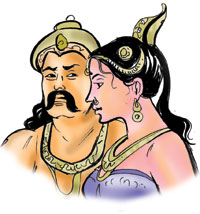
1. There is reason for us to believe that the Aryachakaravartis would have descended from the Brahmins of Rameshwaran. They are also connected to the royal family of Gujarat. In Tamil, the word 'Arya' always refers to the North Indians. Going by these facts, scholars are of the opinion, that the Aryas who served the kings of Dambadeniya, would undoubtedly have been Rajputs.

2. Taking all this into consideration, it may be correct to believe in the North Indian origin of Arychakravartitis. Therefore, the Aryachakravartis of South India and the Arya army that served the kings of Dambadeniya, would have been one group of people as some say. These were a people who were robbed of their land, when the Muslims invaded India. They would have been the 'Rajputs' who drifted to the south and served the Pandya and the Sinhala kings.

3. Whatever be their origin, during the time that we are studying now, a number of generations of Aryachakravartis were living in the Tamil area. They spoke the Tamil language and respected Tamil culture. According to one of the books in Tamil literature, Aryachakravartis are connected to the 'Ganga' line of kings. It may be through marriage alliances, that the Aryachakravartis claim their connection to the 'Ganga' line of kings of Kalinga.

4. The scholars point out that these marriage alliances would have been with the Javaka kings. The Aryachakravartis had been proud of their connections with Rameshwaram, even after spreading their power in Northern Lanka. They have identified themselves as 'Sethukavalan.' 'Sethu' is another name for Rameshwaram. Even in their inscriptions, they are referred to as 'Sethukavalan.'

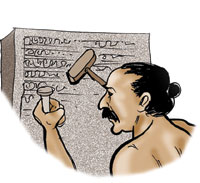
5. This same reference could be found in two inscriptions discovered in India and Lanka. They have used the word 'Sethu,' even in their coins. They state that their capital city was 'Singai Nagar.' This could be Jaffna. In Tamil documents, there is also reference to 'Singai Aryan.' Now if we were to consider the policies of our own kings, it looks as if they carried on a combined rule.

6. This was the policy of Parakramabahu V and Buwanekabahu IV. In one inscription, Parakramabahu V's 15th year of rule is stated as 1218 circa, which is equal to 1359 AD. Accordingly, he has ascended the throne, only three years after Buwanekabahu became king and that is 1344 AD. In another inscription these two kings are referred to as brothers.

7. In a literature book written in the 15th century, it is stated that Parakramabahu V is a son of Vijayabahu V. It further states that the mother of that Parakramabahu was Queen Sumitra. It does not however, state that Buwanekabahu IV too was one of her sons. However, the most efficient minister of both these kings had been Senadhilankara, whose ancestral home was in 'Singuruvana,' close to Gampola.

8. This minister Senadhilankara, in certain other stories is referred to as 'Suhurubandu' of Buwanekabahu IV. The reason for this reference may be because he had got married to a sister of King Buwanekabahu.

About Buddhism

Today's Visitors